
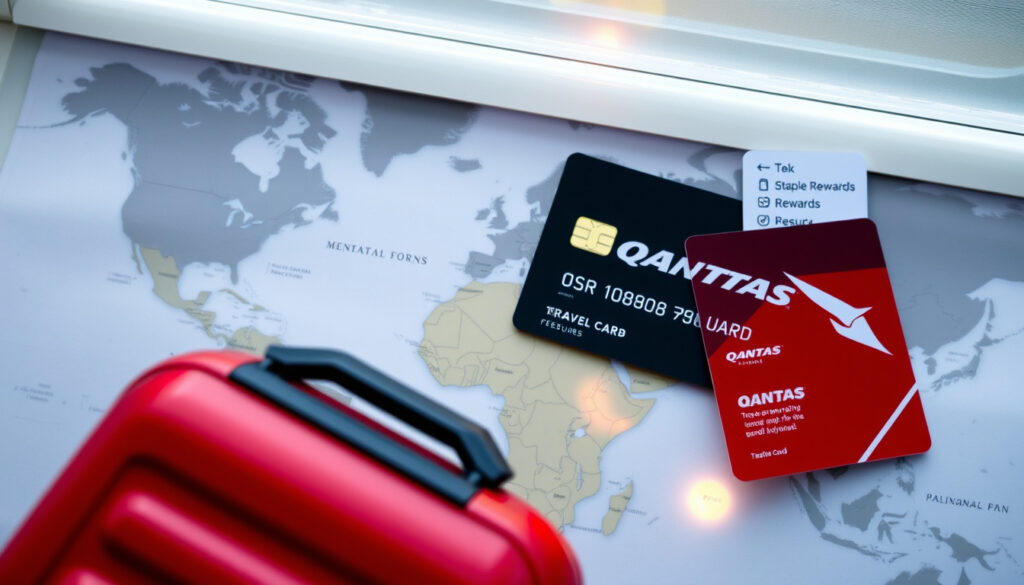
Qantas Travel Card: Complete Guide to Features, Fees & Qantas Points
The Qantas Travel Card, now operating under the Qantas Pay brand, represents a strategic evolution in travel money solutions for Australian frequent flyers. Originally launched as Qantas Travel Money, this prepaid multi-currency Mastercard underwent a significant rebranding on May 21, 2024, transforming how Qantas Frequent Flyer members manage foreign currency while earning rewards on everyday spending. The platform continues to offer a compelling proposition for travellers who prioritise loyalty points accumulation over raw foreign exchange competitiveness.
Understanding the distinction between the former Qantas Travel Money card and its current Qantas Pay iteration has become essential for anyone considering this product. Existing cardholders received automatic transitions with new cards issued, while new applicants can join through the Qantas Frequent Flyer program and access the same underlying functionality. The card operates as a prepaid debit Mastercard capable of holding up to ten major currencies simultaneously, positioning it as a middle-ground option between basic travel cards and comprehensive international banking solutions.
This guide examines the complete fee structure, points earning mechanics, currency support, and application requirements based on verified information from official sources and independent reviews. Whether you’re a long-time Qantas Frequent Flyer exploring travel money options or a newcomer considering the switch, the following analysis provides the factual foundation needed to make an informed decision.
What is the Qantas Travel Card?
The Qantas Travel Card, now branded as Qantas Pay, functions as a prepaid multi-currency Mastercard designed specifically for Qantas Frequent Flyer members in Australia. The card enables users to load, hold, and spend in multiple foreign currencies without incurring foreign transaction fees, provided those currencies have been pre-loaded onto the card. This structure differs fundamentally from credit cards that apply conversion fees at the point of transaction or debit cards that may carry unfavourable exchange rates.
The product serves as a bridge between loyalty program participation and practical travel money management. Rather than offering the lowest possible exchange rates, Qantas Pay prioritises points accumulation for frequent flyers willing to accept slightly less competitive FX pricing in exchange for Qantas Points on every transaction. The card is issued by emoney Ltd under Mastercard’s infrastructure, with Qantas managing the loyalty integration and customer-facing features.
Product Overview
| Aspect | Details |
|---|---|
| Product Type | Prepaid multi-currency Mastercard |
| Rebranding Date | May 21, 2024 |
| Former Name | Qantas Travel Money |
| Target Users | Qantas Frequent Flyer members (aged 16+ in Australia) |
| Maximum Currencies | 10 major currencies simultaneously |
| Card Issue Fee | Free |
| Account Fees | None |
Key Insights
- The card transitioned from Qantas Travel Money to Qantas Pay in May 2024, with existing cardholders receiving replacement cards automatically
- No ongoing account, maintenance, or closure fees apply, making it cost-effective for occasional travellers who may not use the card for extended periods
- The 0.25 Qantas Points per dollar on AUD spending represents a modest return compared to dedicated credit cards, but foreign currency loads and spends earn at the higher 1 point per dollar rate
- Exchange rate markups applied during currency conversions operate without transparent disclosure, functioning as an implicit cost that reviewers have identified as a drawback
- Overseas ATM withdrawals carry fixed fees that vary by currency, ranging from approximately 1.25 GBP to 29.00 ZAR depending on the withdrawal currency
- The card suits frequent flyers who already maximise their Qantas Points earning through other means and seek additional accumulation on travel spending
The product now operates exclusively under the Qantas Pay brand following the May 2024 rebrand. New applications and existing card management occur through the Qantas Money platform at qantasmoney.com/qantas-pay. Anyone searching for the former Qantas Travel Money product should direct enquiries to the Qantas Pay offering, which retains the same underlying functionality.
Supported Currencies
Qantas Pay supports ten major currencies, though the complete list varies slightly depending on which currencies have fees listed in official documentation. Based on available information, the supported currencies include:
- Australian Dollar (AUD)
- US Dollar (USD)
- British Pound (GBP)
- Euro (EUR)
- New Zealand Dollar (NZD)
- Singapore Dollar (SGD)
- Canadian Dollar (CAD)
- Japanese Yen (JPY)
- South African Rand (ZAR)
- Additional currencies referenced in ATM fee schedules
The currency selection covers major travel and business destinations common to Australian travellers, though it falls short of competitors like Revolut, which offers more than 25 currencies. Users cannot hold minor currencies or exotic markets, which may limit utility for travellers to regions like Southeast Asia outside Singapore or parts of South America.
How Does the Qantas Travel Card Work?
The operational mechanics of Qantas Pay follow a load-and-spend model typical of prepaid travel cards. Cardholders first fund their account with Australian dollars, either through bank transfer, BPAY, debit card, Apple Pay, or Google Pay—all of which are free of charge according to official fee documentation. Once loaded in AUD, users can convert to supported foreign currencies within the app or website, holding multiple currencies simultaneously.
When spending abroad, the card draws from the matching currency wallet if that currency has been pre-loaded. This approach eliminates foreign transaction fees that typically plague standard debit and credit cards. For example, a purchase in euros in France would use the EUR wallet directly rather than converting at point-of-sale rates that often include unfavourable markups.
Loading and Reloading Funds
The loading process offers multiple pathways for convenience. Bank transfers and BPAY provide direct connections to Australian transaction accounts, while debit card loading enables rapid top-ups from any Australian card. Mobile payment integration through Apple Pay and Google Pay allows contactless loading for users who prefer digital wallet management.
Loading itself incurs no fees regardless of method, which represents a meaningful advantage over some competitors that charge percentage-based load fees. However, the exchange rate applied during currency conversion includes a markup that constitutes the primary implicit cost of the service. This markup is not transparently displayed, making it difficult to calculate the true cost of currency acquisition before loading.
Using the Card Overseas
Transactions in supported currencies deduct directly from the corresponding wallet without triggering conversion fees or foreign transaction charges. This structure makes Qantas Pay particularly attractive for travellers who know their destination currency in advance and can load accordingly. The absence of foreign transaction fees on pre-loaded currencies places it ahead of standard debit cards that may charge 2-3% on every overseas purchase.
ATM withdrawals overseas operate under a different fee structure. While Australian domestic ATM withdrawals are free, overseas withdrawals carry fixed fees that vary by currency withdrawn. These range from approximately 1.95 AUD equivalent for USD withdrawals to 1.25 GBP for UK withdrawals, 1.50 EUR for European withdrawals, and 2.50 NZD or SGD for those respective currencies. Withdrawals in South African Rand carry notably higher fees up to 29.00 ZAR per transaction.
Currency Conversion Process
Converting between currencies within the Qantas Pay platform occurs through the app or website dashboard. Users select their desired currency and amount, with the system displaying an exchange rate that includes the platform’s margin. Unlike competitors such as Wise that show the exact mid-market rate plus a transparent fee, Qantas Pay presents a single combined rate that obscures the markup.
This opacity has drawn criticism from independent reviewers who note that travellers cannot easily compare Qantas Pay’s effective rate against alternatives without performing manual calculations. For travellers prioritising maximum currency value, this lack of transparency represents a meaningful disadvantage compared to services that clearly display their pricing structure.
What are the Fees for the Qantas Travel Card?
Qantas Pay distinguishes itself through an absence of many fees that plague competing products. The fee schedule eliminates join fees, monthly maintenance charges, account closure costs, and explicit currency conversion fees. This structure makes the card accessible for infrequent travellers who might otherwise avoid travel money cards due to inactivity penalties.
Despite the favourable fee-free positioning on basic services, travellers should understand the implicit costs embedded within exchange rate markups. These hidden charges do not appear as line items but reduce the effective value received during currency conversion. The magnitude of this markup varies with market conditions and is not disclosed separately.
Complete Fee Structure
| Fee Type | Cost |
|---|---|
| Card issue fee | Free |
| Account maintenance fee | None |
| Monthly service fee | None |
| Account closure fee | None |
| AUD top-up (all methods) | Free |
| Australian ATM withdrawal | Free |
| Cash out to Australian bank | Free |
| International transactions (pre-loaded currency) | Free |
| Overseas ATM withdrawal (USD) | 1.95 AUD equivalent |
| Overseas ATM withdrawal (GBP) | 1.25 GBP |
| Overseas ATM withdrawal (EUR) | 1.50 EUR |
| Overseas ATM withdrawal (NZD/SGD) | 2.50 NZD/SGD |
| Overseas ATM withdrawal (ZAR) | 29.00 ZAR |
| Exchange rate markup | Not transparently disclosed |
While Qantas Pay promotes zero fees on transactions and top-ups, the exchange rate markup applied during currency conversions represents the primary cost consideration. Travellers converting significant amounts should compare the effective rate against alternatives like Wise or Revolut, which disclose fees more transparently. For small transactions or occasional use, the absence of explicit fees may still represent good value.
Transaction and Balance Limits
Official documentation references minimum and maximum load amounts, balance caps, and daily transaction or withdrawal limits, though specific figures are not publicly disclosed. Reviewers at The Currency Shop note that limits exist as of October 2024 but advise checking current terms on the Qantas Money website for precise figures relevant to individual circumstances.
These undisclosed limits may affect high-volume travellers or those seeking to consolidate significant travel funds onto a single card. Business travellers or families coordinating larger amounts should confirm applicable limits before relying on Qantas Pay for substantial currency requirements.
Can You Earn Qantas Points with the Travel Card?
Points earning represents the primary differentiator for Qantas Pay compared to conventional travel money products. Unlike standard prepaid cards that offer no rewards, Qantas Pay rewards eligible spending with Qantas Points that accumulate within the Frequent Flyer program. This structure makes the card attractive to existing Qantas loyalists who value points accumulation across all spending categories.
The earning structure divides into two tiers based on transaction currency. Foreign currency loads and purchases in non-AUD currencies earn at one point per Australian dollar spent, while domestic AUD transactions earn at a reduced rate of 0.25 points per dollar. This tiered approach incentivises loading foreign currency before travel, aligning the rewards structure with the card’s intended use case.
Points Earning Rates
| Transaction Type | Qantas Points Earned |
|---|---|
| Foreign currency loads (USD, GBP, EUR, etc.) | 1 point per $1 AUD equivalent |
| Overseas purchases in foreign currency | 1 point per $1 AUD equivalent |
| Domestic AUD transactions | 0.25 points per $1 AUD |
| Currency conversion within platform | Based on resulting currency spend |
The 1 point per dollar rate on foreign spending matches or exceeds many entry-level Qantas credit cards, though premium cards with annual fees often provide elevated earning rates. For travellers who prefer avoiding credit card debt or appreciate the budgeting discipline of prepaid cards, Qantas Pay offers a compelling points-earning alternative without revolving credit implications.
Points Utility and Considerations
Qantas Points earned through Qantas Pay integrate directly into the Frequent Flyer program, joining points earned through flights, partner transactions, and other program activities. Points do not expire for active members who maintain qualifying activity within 18 months, providing flexibility for infrequent travellers.
However, the points earning should be evaluated against the implicit FX markup costs. A traveller who loads $5,000 AUD into EUR wallets might earn 5,000 points but could pay an effective markup of 1-2% on the conversion—costing $50-100 in hidden fees. Calculating whether the points value exceeds this implicit cost requires comparing the retail value of Qantas Points (approximately 1.3-1.5 cents per point when redeemed for flights) against the effective markup paid.
How Do I Apply for a Qantas Travel Card?
Application eligibility requires Australian residency and Qantas Frequent Flyer membership. The membership itself carries a standard annual fee of $99.50, though prospective applicants can obtain a waiver code through the Qantas Pay sign-up process. This fee structure effectively bundles travel money functionality with Frequent Flyer membership, positioning Qantas Pay as an entry point to the loyalty program rather than a standalone product.
The application pathway operates entirely online through the Qantas Money platform. Prospective cardholders log into their Qantas profile or create one if needed, navigate to the Qantas Pay section, and complete the sign-up process. The streamlined digital application supports the product’s positioning as a modern, accessible travel money solution.
Identity Verification Requirements
Australian regulations require identity verification for prepaid card issuance, and Qantas Pay satisfies this requirement through standard documentation. Applicants must provide an Australian address for card delivery, along with identity documents including a driver’s licence and passport. These requirements align with industry standards for Australian financial products.
The verification process supports online completion during application, with instant approval available for eligible Frequent Flyer members. Card delivery timelines depend on Australian Post delivery schedules, though digital wallet functionality through Apple Pay or Google Pay may become available before physical card arrival for eligible users.
Application Steps
- Log into existing Qantas Frequent Flyer account or create new membership
- Navigate to Qantas Money section and select Qantas Pay sign-up
- Complete application form with Australian residential address
- Provide identity verification documents (driver’s licence and passport)
- Wait for instant approval notification
- Receive physical card by post (free delivery within Australia)
- Activate card upon receipt and link to digital wallet if desired
After Approval
Upon approval, cardholders can immediately begin loading Australian dollars through the available methods. The physical card typically arrives within standard postal timeframes, though some users report waiting periods of several business days depending on location. Once received, activation through the app or website completes the setup process.
Existing Qantas Travel Money cardholders who transitioned to Qantas Pay in May 2024 received new cards automatically. These cardholders should have received communication about the transition process and can manage their updated card through the same Qantas Money platform used for new applications.
What are the Alternatives to Qantas Travel Card?
Several alternatives merit consideration for travellers seeking different feature combinations or lower costs. Competitors in the Australian market include dedicated multi-currency cards, broader fintech platforms, and traditional credit card options. Each alternative presents trade-offs between fees, currency selection, transparency, and rewards integration.
The choice between Qantas Pay and alternatives depends heavily on individual priorities. Travellers who maximise Qantas Points through other channels and seek incremental accumulation may find Qantas Pay worthwhile despite higher implicit costs. Those prioritising currency value or currency variety should explore competitors that offer more transparent pricing and broader currency support.
Multi-Currency Card Alternatives
| Provider | Key Strengths | Primary Fees | Currencies |
|---|---|---|---|
| Wise | Transparent FX, low costs | Card order 10 AUD; transfers from 0.33% | More than 10 |
| Revolut | Weekday FX without markup, extensive currencies | No card fee; 0.5% after free limit; plans from 0 AUD | 25+ |
| Qantas Pay | Qantas Points earning, Frequent Flyer integration | Free card; implicit FX markup | 10 |
Wise positions itself as the transparent, low-cost alternative for travellers prioritising currency value. The platform shows exact mid-market exchange rates plus clear fees, enabling informed decision-making. While Wise does offer a travel card, its primary strength lies in international money transfers rather than prepaid spending, though the card functionality remains competitive for straightforward travel needs.
Revolut offers the most extensive currency support among competitors, with over 25 supported currencies and weekday foreign exchange at no markup within free tier limits. The platform’s modern app experience and flexible spending controls appeal to digitally native travellers. However, Revolut does not integrate with airline loyalty programs, making it unsuitable for travellers specifically seeking points accumulation.
Frequent Flyer Credit Cards
Traditional credit cards in the Qantas Frequent Flyer ecosystem offer alternative pathways to points accumulation, though they introduce revolving credit requirements and often carry annual fees. Products like the American Express Qantas Ultimate Card offer elevated points earning rates and travel benefits but require annual fees up to $450 and may apply foreign transaction fees unless explicitly waived.
Credit cards differ fundamentally from prepaid solutions in that they involve borrowing money rather than spending pre-loaded funds. Travellers who prefer the budgeting discipline of prepaid cards or wish to avoid credit may find Qantas Pay’s structure more aligned with their preferences, even if the points earning rate falls short of premium credit alternatives.
Timeline: Evolution of Qantas Travel Money to Qantas Pay
The product now known as Qantas Pay has undergone significant evolution since its initial launch, reflecting broader changes in the travel money market and Qantas’s loyalty strategy. Understanding this progression provides context for the current offering and helps explain the rebranding rationale.
- Predecessor launch: Qantas Travel Money debuted as one of the first airline-branded prepaid travel cards in the Australian market, leveraging Frequent Flyer program integration to differentiate from generic travel money products
- May 2024 rebranding: Qantas Travel Money officially transitioned to Qantas Pay, with new card issuance for existing holders and updated branding across all Qantas Money platforms
- Current status: Qantas Pay remains actively available as of late 2024 reviews, with no discontinuation announcements from Qantas or the card issuer
What Information Remains Unclear?
Despite comprehensive official documentation, several aspects of Qantas Pay lack public clarity. Travellers considering the product should be aware of these gaps when evaluating suitability for their specific circumstances.
| Confirmed Information | Information Requiring Verification |
|---|---|
| No join, account, or maintenance fees | Specific minimum and maximum load limits |
| 1 point per $1 on foreign currency; 0.25 points per $1 on AUD | Daily transaction and withdrawal caps |
| 10 supported currencies listed in fee schedules | Complete list of supported currencies beyond those with published ATM fees |
| Free Australian ATM withdrawals | Specific balance maximums |
| Active product status as of late 2024 | Future fee structure changes |
| Overseas ATM fees per currency | Mobile app feature details |
The opacity around limits and the exchange rate markup represent the most significant gaps affecting informed decision-making. Prospective users should consult current terms directly through Qantas Money’s official fee documentation to confirm applicable limits and rates at the time of application.
The Broader Context: Travel Money and Loyalty Programs
Qantas Pay represents a specific intersection between travel money management and airline loyalty programs that has gained traction in the Australian market. This positioning reflects broader industry trends where financial products increasingly integrate with rewards programs to drive customer acquisition and retention.
The prepaid travel card market in Australia has matured considerably since early entrants launched similar products. Modern travellers benefit from competitive pressure that has reduced explicit fees across the industry, though implicit costs through exchange rate markups persist as the primary revenue mechanism for most providers. Qantas’s approach of foregoing some fee revenue in favour of loyalty engagement aligns with the airline’s broader strategy of deepening customer relationships through the Frequent Flyer program.
For travellers considering whether Qantas Pay suits their needs, the decision framework should weigh points-earning value against implicit FX costs, evaluate currency requirements against supported options, and compare overall value against alternatives. Those exploring comprehensive travel money strategies may also find value in reviewing related Qantas Travel Card options and how they integrate with broader loyalty program participation.
Sources and Official References
The Qantas Pay fee schedule confirms no join, account, maintenance, closure, or currency conversion fees apply, with specific overseas ATM withdrawal fees varying by currency withdrawn.
The rebranding from Qantas Travel Money to Qantas Pay occurred on May 21, 2024, with existing cardholders transitioned automatically and new sign-ups available through the Qantas Money platform.
Points earning rates of 1 point per $1 on foreign currency and 0.25 points per $1 on domestic AUD transactions remained consistent following the May 2024 rebrand, with no announced changes to the earning structure.
Summary
The Qantas Travel Card, now operating as Qantas Pay following its May 2024 rebrand, serves Qantas Frequent Flyer members seeking a prepaid travel money solution with integrated points earning. The card’s strengths lie in its fee-free basic structure, Qantas Points accumulation on foreign currency transactions, and the convenience of holding multiple currencies without foreign transaction fees. Its limitations include opaque exchange rate markups, a relatively narrow currency selection compared to fintech competitors, and modest points earning on domestic spending.
For frequent flyers already committed to the Qantas ecosystem, Qantas Pay offers a reasonable option for managing travel spending while building points balances. Those prioritising the lowest possible exchange rates or the widest currency variety should explore alternatives like Wise or Revolut, which provide more transparent pricing structures and broader currency support. Prospective applicants should verify current terms directly through Qantas Money and consider how this card fits within their broader travel money planning when preparing international trips.
Frequently Asked Questions
Is the Qantas Travel Card still available?
Yes. The product continues under the Qantas Pay brand following the May 2024 rebrand. Existing Qantas Travel Money cards were automatically transitioned, and new applications remain open to Australian Qantas Frequent Flyer members.
How many Qantas Points do you earn with the Qantas Travel Card?
One point per Australian dollar on foreign currency loads and overseas purchases, and 0.25 points per dollar on domestic AUD transactions.
What currencies does Qantas Pay support?
Ten major currencies including AUD, USD, GBP, EUR, NZD, SGD, CAD, JPY, ZAR, and at least one additional currency referenced in fee schedules.
Are there any fees for using Qantas Pay overseas?
Australian ATM withdrawals and transactions in pre-loaded currencies are free. Overseas ATM withdrawals carry fixed fees varying by currency, from approximately 1.25 GBP to 29.00 ZAR.
How do I apply for Qantas Pay?
Log into your Qantas profile and select Qantas Pay sign-up through the Qantas Money platform. Provide an Australian address, driver’s licence, and passport for identity verification. Approval is typically instant for eligible Frequent Flyer members.
What are the main alternatives to Qantas Pay?
Wise and Revolut offer multi-currency cards with more transparent pricing and broader currency support, though they do not provide Qantas Points earning. Qantas credit cards offer higher points rates but involve annual fees and credit obligations.
Can I use Qantas Pay if I’m not a Qantas Frequent Flyer?
No. Qantas Pay is exclusively available to Qantas Frequent Flyer members. The program waives the standard $99.50 membership fee for applicants who use the Qantas Pay sign-up code during registration.
Does Qantas Pay charge for currency conversion?
No explicit conversion fee applies, but an undisclosed exchange rate markup applies to all currency conversions. This markup is not transparently displayed, making it difficult to calculate the true conversion cost.
Related stories



Liam O'Brien covers Australian politics and public affairs for Australia Pulse.