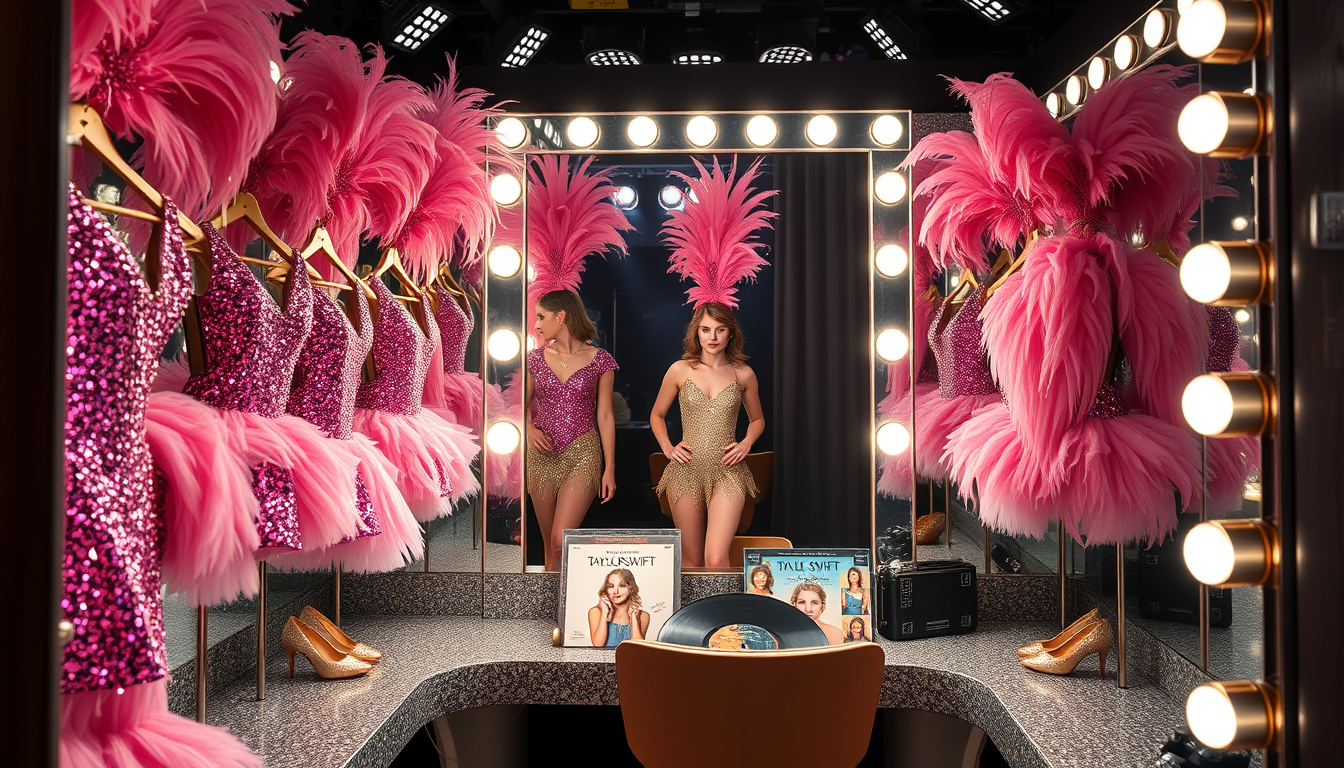
Taylor Swift released her twelfth studio album, The Life of a Showgirl, on October 3, 2025, and it immediately sparked fierce debate—selling over 4 million copies while drawing some of the sharpest criticism of her career. Twelve tracks, a fictional showgirl character named Kitty, and lyrics that divided Swifties and critics alike made this album one of her most polarizing yet.
Release Date: October 3, 2025 · Tracks: 12 songs · Label: Republic Records · Vinyl Variant: Portofino Orange Glitter · Wikipedia Entry: The Life of a Showgirl
Quick snapshot
- Released October 3, 2025 (Wikipedia)
- 12 tracks on Republic Records (On The Records)
- Sales exceeded 4 million copies (On The Records)
- Official complete tracklist sequence
- Long-term chart performance data
- Regional sales breakdowns
- Announced August 13, 2025 on New Heights podcast (Oakland Post)
- Recorded during Eras Tour European leg, mid-2024 (Wikipedia)
- Swift’s next album cycle timing remains unknown
- Tour speculation ongoing in fan communities
The key facts about The Life of a Showgirl paint a picture of a deliberate artistic pivot for Swift.
| Label | Value |
|---|---|
| Artist | Taylor Swift |
| Album Type | 12th studio album |
| Release Date | October 3, 2025 |
| Platform | Spotify, YouTube |
| Special Edition | Portofino Orange Glitter Vinyl |
What will The Life of a Showgirl be about?
Swift constructed The Life of a Showgirl around a fictional protagonist named Kitty—a character who serves as a stand-in for the performer navigating fame, relationships, and public perception. The narrative thread runs through multiple tracks, with each song offering Kitty another layer of advice or reflection.
The title track itself reportedly contains the line “you don’t know the life of a showgirl baby,” establishing the central metaphor. Critics at Her Campus noted that marketing had promised a dark, theatrical showgirl aesthetic, but the album instead delivers a meditation on the modern music industry and its particular pressures.
Fictional showgirl story
The Kitty narrative provides cohesion across an album that ranges from upbeat numbers to melancholic ballads. Wikipedia confirms the album was inspired by the Eras Tour and Swift’s relationship with Travis Kelce, lending personal stakes to the fictional framework.
Kitty character advice
Songs like “The Fate of Ophelia” and “Elizabeth Taylor” reportedly offer what could be read as Kitty’s counsel on love, loyalty, and self-preservation—themes that resonate with Swift’s own public journey.
Is The Life of a Showgirl actually good?
This is where opinions split sharply. On one hand, the album reportedly received high praise from some corners; on the other, critics questioned whether the lyrics match the ambition of the concept.
Critical reviews
The Catalyst described the album as “criticized for millennial-cringe lyrics, shallow topics, [and] capitalist appetite.” The Plainsman’s analysis picked apart specific lines, including lyrics from “Eldest Daughter” that read “But I’m not the baddest / And this isn’t savage” and lines from “CANCELLED!” featuring “Did you girl-boss too close to the sun?” and “Good thing I like my friends cancelled.”
Swift herself addressed the mixed reception on Apple Music 1’s Zane Lowe Show, stating that any press helps during an album’s first week. Her attitude: “I welcome the chaos,” she said, according to the Oakland Post.
Fan reception
Initial fan response drew comparisons to Lorde’s Solar Power reception—strong dislike upon release that might eventually develop into a cult following, per Her Campus. The album leans into soft 70s sounds rather than the pop rock bangers some fans anticipated based on marketing, according to analysis of Swift’s Zane Lowe conversation.
The album’s softening sonically alongside polarizing lyrics creates an odd tension: fans expecting theatrical punch got something gentler, while those expecting radio-friendly Swift got some of her sharpest, most divisive writing yet.
Why is The Life of a Showgirl so popular?
Despite the criticism—or perhaps because of it—The Life of a Showgirl moved over 4 million copies. Swift’s ability to generate conversation is arguably her most reliable talent, and this album delivered in spades.
Bold leap factors
The showgirl concept itself represents a departure from Swift’s typical confessional approach. Rather than direct autobiography, she built a character study that allowed her to comment on the industry from a slight remove. The move toward adult themes and explicit language in roughly two-thirds of the tracks (8 out of 12, according to On The Records analysis) also signaled a willingness to alienate younger fans in exchange for artistic latitude.
Swifties appeal
For dedicated fans, the album offers plenty to analyze: references to real-life friendships, feuds, and controversies buried in lyrics that reward close reading. The track “Actually Romantic” is reportedly read as a critique of Charli XCX, referencing Charli’s own “Sympathy Is a Knife,” while “CANCELLED!” apparently tackles cancel culture with lines about friends “cancelled” and “welcome to my underworld.”
The implication: Swift engineered controversy deliberately, knowing that discourse extends an album’s shelf life far beyond release week.
Why don’t people like The Life of a Showgirl?
The criticisms fall into several buckets: lyrical content, marketing disconnect, and broader questions about Swift’s cultural sensitivity.
Hate reasons
The expletive density ranks among the most cited complaints. Eight of twelve tracks reportedly contain explicit language, a significant departure from Swift’s earlier work. The Plainsman’s review noted that track “Wood” contains “grotesque sexual innuendos,” while other tracks feature milder profanity that still surprised listeners accustomed to Swift’s cleaner catalog.
The AI promotional controversy added fuel. Fans criticized the use of generative AI in promotional videos, creating the #SwiftiesAgainstAI hashtag, and the videos were ultimately removed without official comment from Swift’s team, per Oakland Post reporting.
Polarization
The album’s self-awareness cut both ways. Some listeners appreciated the willingness to poke fun at the music industry; others felt the lyrics crossed from confident to tone-deaf, particularly regarding politically sensitive content involving friends’ public affiliations, according to The Plainsman.
Swift’s willingness to absorb chaos as currency—the “I welcome the chaos” quote—suggests she calculated that controversy itself generates the kind of attention that sustains an artist beyond any single release cycle.
Why is Life of a Showgirl so controversial?
Controversy follows Taylor Swift the way spotlight follows her on stage. With this album, the triggers were specific: language choices, feud references, AI promotion, and political undertones. For a deeper dive into the controversies surrounding this album, you can refer to this K-pop Demon Hunters parents guide. K-pop Demon Hunters parents guide
Swifties divide
The fanbase fractured along predictable lines. Longtime listeners who appreciated Swift’s evolution tolerated the adult content; those who grew up with her catalog felt betrayed by the tonal shift. The comparison to Lorde’s Solar Power reception (initial hate, potential cult status) feels apt as a framework.
Polarizing elements
By December 2025, a smear campaign had emerged that accused Swift of far-right politics via lyrics and merchandise, per Wikipedia’s documented timeline. Whether this was organic backlash or coordinated opposition remains unclear, but it added another layer to an already contentious release cycle.
The pattern: Swift’s boldest artistic gambles consistently generate the most heat, and this album doubled down on that strategy.
| Track | Language Level | Notable Content |
|---|---|---|
| The Fate of Ophelia | Clean | Melancholic ballad |
| Elizabeth Taylor | Clean | Character study |
| Opalite | Clean | Atmospheric track |
| Ruin The Friendship | Clean | Relationship dynamics |
| Eldest Daughter | Mild profanity | Personal reflection |
| Honey | Mild profanity | Upbeat track |
| Life of a Showgirl | Mild profanity | Title track, title character reference |
| Father Figure | PG-13 | Family themes |
| Actually Romantic | PG-13 | Reported feud reference |
| Wish List | PG-13 | Desires and wants |
| Wood | PG-13 | Explicit innuendos |
| CANCELLED! | PG-13 | Cancel culture commentary |
Upsides
- Over 4 million in sales proves commercial viability despite controversy
- Bold artistic choices signal creative ambition beyond radio formula
- Fictional framework allows exploration without direct autobiography
- Soft 70s sound offers sonic variety from Eras Tour era
Downsides
- Marketing promised theatrical showgirl theme; album delivered different aesthetic
- Explicit content alienated younger portions of fanbase
- Some lyrics read as tone-deaf regarding political sensitivities
- AI promotional controversy damaged trust with core fandom
- Gap between concept and execution left critics underwhelmed
What people are saying
The rule of show business is, if it’s the first week of my album release and you are saying either my name or my album title, you’re helping.
— Taylor Swift, in Zane Lowe interview on Apple Music 1 (Oakland Post)
The album has 12 tracks ranging from upbeat to melancholy, with the showgirl theme providing… inspiration.
— The Feather, album overview (The Feather)
Marketing promised dark showgirl theme but delivered modern music industry reflection.
— Her Campus, critical analysis (Her Campus)
For listeners deciding whether to stream or skip The Life of a Showgirl, the calculus is straightforward: if you want the Taylor Swift who plays it safe, look elsewhere. If you want the version willing to risk sharp criticism for artistic choices she clearly considered worth making, this album delivers exactly what it promises—even if what it promises divides the room.
What songs are on The Life of a Showgirl?
The album contains 12 tracks including “The Fate of Ophelia,” “Elizabeth Taylor,” “Opalite,” “Ruin The Friendship,” “Eldest Daughter,” “Honey,” the title track, “Father Figure,” “Actually Romantic,” “Wish List,” “Wood,” and “CANCELLED!” Sources vary slightly on exact ordering.
Where can I buy The Life of a Showgirl vinyl?
The album is available on Republic Records with a special Portofino Orange Glitter vinyl edition sold through standard music retail channels and Swift’s official store.
Is there an official playlist for The Life of a Showgirl?
The album is available on Spotify and YouTube through official streaming platforms. Physical media and digital downloads are available through standard music retailers.
What is the story behind The Life of a Showgirl?
The album centers on a fictional showgirl character named Kitty while serving as a reflection on the modern music industry. It was recorded in Sweden with producers Max Martin and Shellback during the Eras Tour’s European leg in mid-2024, inspired by that tour and Swift’s relationship with Travis Kelce.
How many tracks does The Life of a Showgirl have?
The album has 12 tracks. Of these, approximately 8 contain explicit language, while 4 tracks (“The Fate of Ophelia,” “Elizabeth Taylor,” “Opalite,” “Ruin The Friendship”) are reportedly clean.
When did Taylor Swift release The Life of a Showgirl?
Taylor Swift released The Life of a Showgirl on October 3, 2025. She announced the album on August 13, 2025, via the New Heights podcast hosted by Travis Kelce.
Related reading: Musicals Melbourne 2025 · I Dream of Jeannie
Taylor Swift unveiled The Life of a Showgirl during her podcast, where the tracklist and podcast announcement first ignited fan frenzy over its showgirl themes.

Grace Campbell leads fact-checking, source verification and corrections at Australia Pulse.