
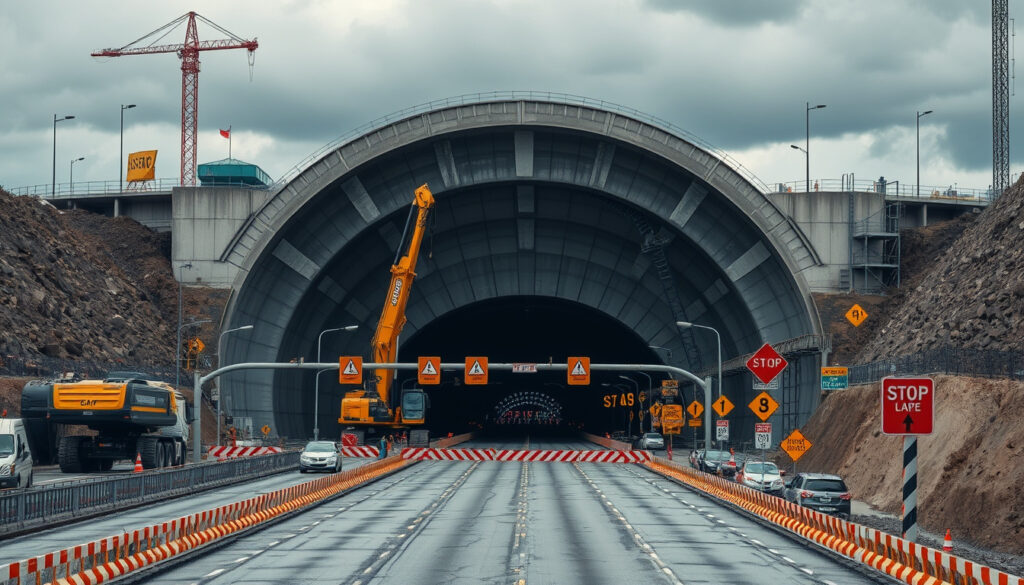
Melbourne’s West Gate Tunnel project has emerged as one of Australia’s most contentious infrastructure undertakings, with a trajectory marked by mounting costs, repeated delays, and persistent uncertainty. The initiative, designed to alleviate pressure on the aging West Gate Bridge, has evolved from a promising solution to a cautionary example of megaproject management challenges.
Since construction commenced in 2019, the project has struggled with contaminated soil disposal, legal disputes among key stakeholders, and escalating financial burdens that have nearly doubled the original budget. As of mid-2025, the venture stands at a crossroads, with taxpayers and toll users bearing an increasingly heavy share of the financial weight while the promised completion date remains elusive.
What is the West Gate Tunnel Project?
The West Gate Tunnel represents a significant infrastructure venture intended to transform travel patterns across Melbourne’s western corridor. The project encompasses the construction of twin tunnels spanning approximately 9 kilometers, creating a direct link between the West Gate Freeway at Yarraville and Spotswood, extending through to CityLink at Docklands and onward to the Port of Melbourne.
The consortium driving the project involves Transurban, which operates the existing CityLink toll network, in partnership with construction firm CPB-John Holland. A market-led proposal signed in 2016 established the framework, with the Victorian Government providing planning approvals and regulatory support. The official project website maintains information on construction progress and community engagement initiatives.
- The project aims to cut travel time between CityLink and the West Gate Freeway by approximately 20 minutes
- PFAS contamination in approximately 3 million tonnes of soil has emerged as the primary obstacle
- Cost escalation has reached nearly double the original budget, with public contribution fixed at $2.7 billion
- Tunnelling operations have experienced significant stand-downs, affecting hundreds of workers
- The benefit-cost ratio reportedly dropped from 1.1 to 1.0 during early planning stages
| Fact | Details |
|---|---|
| Location | Melbourne, linking West Gate Freeway to CityLink |
| Builder | Transurban and CPB-John Holland joint venture |
| Original Budget | $6.7 billion (finalized 2016) |
| Current Cost Estimate | Nearly $12 billion (June 2025 reports) |
| Start Date | 2019 |
| Original Target | 2022 |
| Current Projection | End of 2025 (subject to change) |
When Will the West Gate Tunnel Open and Why the Delays?
The question of opening dates has become increasingly difficult to answer with confidence. What began as a straightforward 2022 target has transformed into a moving deadline that continues to slip further into the future. The latest official projection targets the end of 2025, though industry observers and political critics maintain healthy skepticism about this timeline.
Timeline of Delays
The first significant delay materialized when PFAS-contaminated soil emerged as an insurmountable obstacle. The original completion target of 2022 gave way to revised estimates as disposal options for the contaminated material proved limited. The Victorian Government’s Big Build authority has documented progress on various work fronts, though tunnelling operations have consistently lagged behind schedules.
A second major delay occurred when Transurban announced the project would not meet the 2023 target. At this point, tunnelling had effectively stalled, leading to the stand-down of over 200 workers with an additional 400 positions reportedly at risk. The fixed-price contract structure with CPB-John Holland placed responsibility for these delays squarely on the builder, though subsequent disputes have complicated this arrangement.
Despite tunnelling delays, substantial progress continues on surface infrastructure. Summer works on the West Gate Freeway, Maribyrnong River bridges, and Footscray Road connections to CityLink have advanced according to project documentation.
Factors Behind the Persistent Delays
Beyond the contamination issues, the project has encountered complications related to utility relocations, ongoing legal disputes between key parties, and planning amendment GC65, which some reports suggest faces potential revocation. Premier Jacinta Allan has expressed optimism about the current timeline, though public confidence remains subdued given the project’s history of missed targets.
What Caused the West Gate Tunnel Blowout?
The term “blowout” in the context of the West Gate Tunnel refers primarily to cost escalations rather than structural incidents. Available sources indicate no collapse or significant structural failure has occurred; instead, the blowout terminology applies to the dramatic cost overruns that have characterized the project’s financial trajectory.
The PFAS Contamination Crisis
The discovery of PFAS (per- and polyfluoroalkyl substances) contamination in approximately 3 million tonnes of soil required for tunnelling operations fundamentally disrupted project planning. These chemicals, associated with firefighting foams historically used at nearby industrial sites, require specialized disposal procedures that existing infrastructure could not accommodate. The absence of suitable disposal sites forced project managers to seek expensive alternative solutions, directly contributing to cost escalation.
PFAS compounds persist in the environment and require specialized handling. The West Gate Tunnel project encountered these substances during excavation, necessitating disposal at approved facilities—a process that has cost hundreds of millions of dollars and consumed significant time.
Contractual and Planning Disputes
The project’s fixed-price contract with CPB-John Holland nominally places responsibility for cost overruns on the builder. However, the relationship between the construction consortium, Transurban, and the Victorian Government has deteriorated significantly. Legal battles have erupted over liability for the contamination-related expenses, with each party seeking to minimize their exposure to the mounting costs.
Environmental opposition and community pushback have added layers of complexity to the project’s progression. Media scrutiny has amplified public awareness of the issues, creating political pressure that influences decision-making at various levels of government.
How Much Does the West Gate Tunnel Cost?
The financial dimension of the West Gate Tunnel project represents one of its most contentious aspects. What began as a $5.5 to $6.7 billion undertaking has swelled to nearly double that figure, with the final cost remaining uncertain as the project continues to encounter unexpected challenges.
Cost Escalation Timeline
| Milestone | Estimated Cost |
|---|---|
| Initial market-led proposal | $5.5–6.7 billion |
| Budget finalized (2016) | $6.7 billion |
| 2025 reports | $10.2 billion (+$4.7 billion) |
| June 2025 update | Nearly $12 billion |
The Grattan Institute’s analysis of megaprojects provides important context for understanding these escalations. Australian infrastructure ventures of comparable scale have experienced construction-phase blowouts averaging 28%, with typical overruns exceeding $600 million. The West Gate Tunnel’s situation, while extreme, fits within a broader pattern of cost management challenges affecting major Australian projects.
The public contribution stands at $2.7 billion, but extended CityLink toll increases (4.25% annually for a decade) will see toll users absorbing much of the ongoing financial burden. Political opponents have criticized the public-private partnership structure that has emerged.
A fresh blowout of $1.5 billion reported in June 2025 brought the total to approximately $12 billion, according to analysis published by the Victorian Liberal Party. The party’s statement on the latest developments emphasized the nearly twofold increase from original estimates and called for greater transparency in project accounting.
What Are the Key Benefits of the West Gate Tunnel?
Despite its difficulties, the West Gate Tunnel project continues to be defended by its proponents as essential infrastructure for Melbourne’s future. The core justification centers on addressing chronic congestion affecting the West Gate Bridge, which serves as the primary western entry point to the city.
Traffic Relief and Connectivity
The primary promise involves providing an alternative route for freight and commuter traffic currently funneled across the West Gate Bridge. By creating a direct connection between the West Gate Freeway and CityLink, the project aims to redistribute traffic flows and reduce pressure on existing infrastructure. Project documents suggest potential time savings of up to 20 minutes for some journeys.
Freight and Port Access
The connection to the Port of Melbourne represents a significant consideration for logistics and trade. Improved access for heavy vehicles could enhance freight efficiency, though critics question whether the benefits justify the extraordinary costs. The Victorian Government’s project information emphasizes the economic development potential and export facilitation aspects of the completed tunnel.
Community and Environmental Considerations
Proponents argue that diverting traffic underground could reduce surface-level congestion in residential areas near the West Gate Freeway corridor. However, environmental groups have raised concerns about the project’s overall carbon footprint and the handling of contaminated materials. These competing perspectives reflect the broader tensions inherent in major infrastructure decisions.
Project Timeline: Key Milestones
Understanding the West Gate Tunnel’s progression requires examining the sequence of events that have shaped its development. The following timeline captures the major milestones and inflection points in the project’s history.
- 2016: Market-led proposal signed, establishing the framework for public-private partnership
- 2017: Project receives formal approval from the Victorian Government
- 2019: Construction activities commence on initial works
- 2022: Original completion target passes without achievement; PFAS contamination becomes prominent issue
- 2023: Second delay announced; tunnelling operations stall; workforce stand-downs begin
- 2024: Ongoing negotiations between government, Transurban, and CPB-John Holland
- Late 2025: Current projected completion target (subject to revision)
What Is Confirmed Versus Uncertain?
Given the project’s turbulent history, distinguishing between established facts and ongoing uncertainties helps clarify the current situation for stakeholders and interested observers.
Established Information
- Tunnel length: approximately 9 kilometers
- Cost has exceeded $10 billion
- PFAS contamination contributed significantly to delays
- Original target completion was 2022
- Public contribution: $2.7 billion
- Contractors: CPB-John Holland
- Operator: Transurban
Information That Remains Unclear
- Exact final cost (currently estimated near $12 billion)
- Firm opening date beyond 2025
- Outcome of legal disputes between parties
- Full traffic relief impact once operational
- Future toll increase trajectory
- Long-term maintenance responsibilities
Broader Context: Melbourne’s Infrastructure Challenges
The West Gate Tunnel does not exist in isolation but forms part of Melbourne’s broader infrastructure landscape. The city’s rapid population growth has created persistent pressure on transportation networks, with successive governments pursuing various solutions to manage increasing demand.
The project’s struggles have drawn attention to the challenges of public-private partnerships in infrastructure delivery. Questions about risk allocation, transparency in cost reporting, and the long-term implications of toll road concessions continue to generate debate among policy experts and taxpayers alike.
As Melbourne continues to evolve, the lessons from the West Gate Tunnel experience will likely inform future infrastructure planning. The balance between ambitious projects and realistic assessments of cost, timeline, and risk remains an ongoing challenge for cities seeking to accommodate growth while maintaining fiscal responsibility.
Sources and Perspectives
Multiple sources have contributed to the available information about the West Gate Tunnel project. Official project communications provide updates on construction activities and community engagement. Government bodies including the Victorian Department of Government Services and the Big Build authority maintain project documentation.
Research organizations such as the Grattan Institute have produced analysis examining the West Gate Tunnel within the context of Australian megaproject performance. Their work highlights patterns of cost escalation that extend beyond individual project failures.
Media coverage has played a significant role in documenting the project’s challenges, with investigative reports bringing public attention to delays, cost overruns, and stakeholder disputes. These sources collectively provide the foundation for understanding the West Gate Tunnel’s complex history and uncertain future.
Summary and Outlook
The West Gate Tunnel project stands as a testament to the challenges facing major infrastructure initiatives in contemporary Australia. From an initial budget of $6.7 billion targeting completion in 2022, the venture has evolved into an undertaking approaching $12 billion with an uncertain finish date. The PFAS contamination crisis has emerged as the defining obstacle, though contractual disputes and planning complications have compounded the difficulties.
Surface infrastructure continues to advance, with freeway upgrades, bridge construction, and connection works proceeding according to updated schedules. Tunnelling operations, however, remain months behind target, and the end of 2025 projection faces considerable skepticism from observers who note the project’s pattern of delayed milestones.
For those interested in Melbourne’s cultural offerings during what may prove to be an extended construction period, the city hosts diverse entertainment options including Musicals Melbourne 2025 – Full Schedule Tickets Venues and various Baia di Vino – Sandringham Bayside Restaurant Guide establishments offering respite from infrastructure-related disruptions.
What are the main reasons for the West Gate Tunnel delays?
The primary causes include PFAS contamination in approximately 3 million tonnes of soil requiring specialized disposal, legal disputes between the government, Transurban, and CPB-John Holland, utility relocations, and planning complications. These factors combined have pushed completion from 2022 to beyond 2025.
Is the West Gate Tunnel still under construction?
Yes, construction continues with surface works progressing on the West Gate Freeway, Maribyrnong River bridges, and CityLink connections. However, tunnelling operations remain behind schedule and face ongoing challenges.
How has the West Gate Tunnel cost changed over time?
The budget increased from an initial $6.7 billion to approximately $10.2 billion by late 2025 reports, with further escalation to nearly $12 billion following a June 2025 update. This represents nearly double the original cost estimate.
What is PFAS contamination and why does it matter for the project?
PFAS (per- and polyfluoroalkyl substances) are chemicals requiring specialized disposal due to environmental persistence. The contamination found in soil along the tunnel route has cost hundreds of millions to address and remains a primary driver of delays and cost overruns.
Who is paying for the West Gate Tunnel cost overruns?
The public contribution stands at $2.7 billion, while toll users face extended CityLink toll increases of 4.25% annually over ten years. Taxpayers and regular users of the toll system bear the primary financial burden of the overruns.
What benefits is the West Gate Tunnel supposed to provide?
The project promises to reduce congestion on the West Gate Bridge, cut travel times by up to 20 minutes for some routes, improve freight access to the Port of Melbourne, and provide an alternative crossing for western Melbourne traffic.
Has there been a structural collapse at the West Gate Tunnel?
No collapse or significant structural failure has been reported in available sources. The term “blowout” in reference to this project applies to cost escalations rather than structural incidents.
Related stories



Liam O'Brien covers Australian politics and public affairs for Australia Pulse.