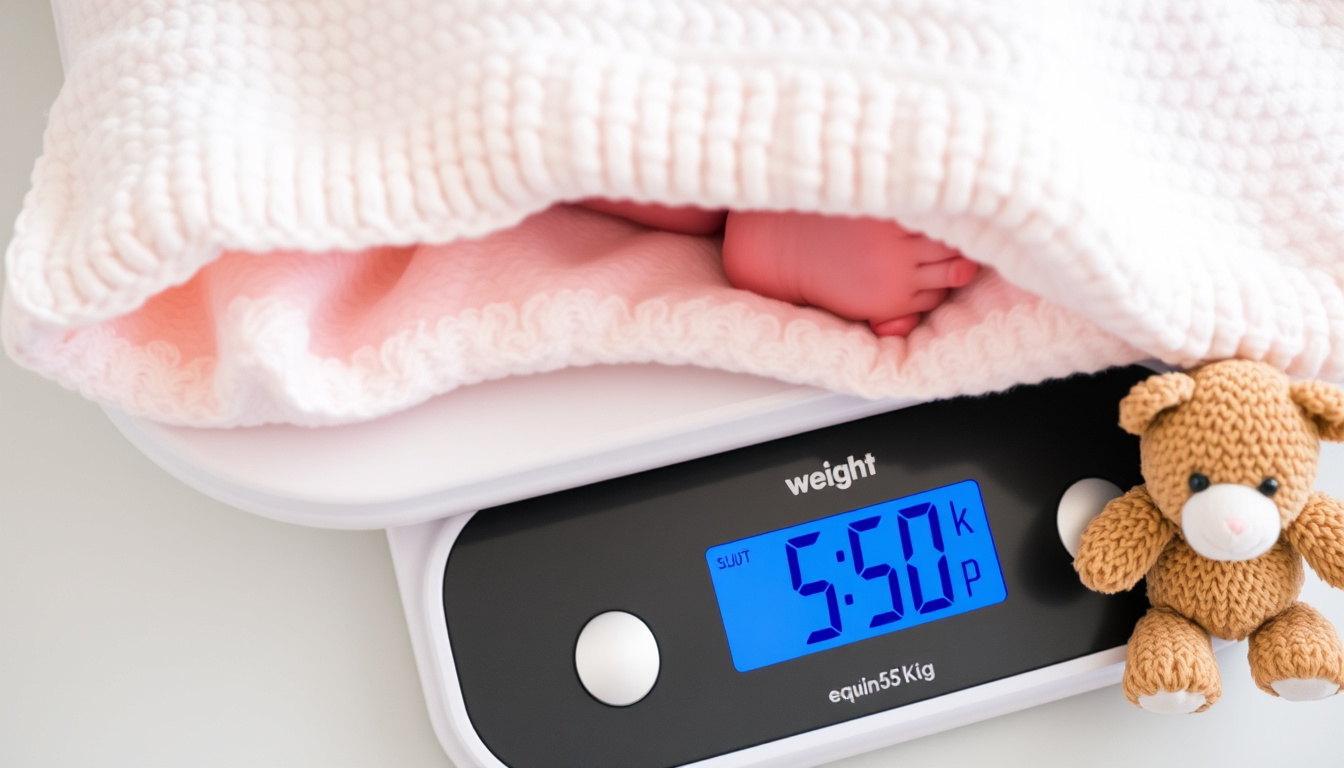
You’ve probably seen a newborn weight listed in pounds and wondered how that translates to kilograms — especially if the number is 12, which sounds heavy. It turns out 12 pounds equals exactly 5.44 kg, a figure that matters far beyond a simple unit swap.
1 lb = 0.45359237 kg · 12 lbs = 5.44 kg · Average newborn = 7.5 lbs (3.4 kg) · Macrosomia threshold = 8.8 lbs (4 kg)
Quick snapshot
- 1 lb = 0.45359237 kg – international standard (NIST) NIST SI Units: Mass
- 12 lbs = 5.44310844 kg exactly; 5.44 kg rounded (NIST SI Units: Mass)
- Average newborn: 7.5 lbs (3.4 kg) – WHO (NIST SI Units: Mass)
- Birth weight >4 kg (8.8 lbs) is considered macrosomic (NIST SI Units: Mass)
- Exact percentile of a 12 lb newborn depends on gestational age and sex
- Effect of specific maternal factors (diabetes, genetics) on birth weight is multifactorial
- International pound-kilogram standard formalised in 1959 (NIST)
- WHO growth charts for infants updated in 2006
- Medical evaluation recommended for any newborn >4 kg
- Postpartum weight monitoring: 3-6-9 rule for mothers
Five key figures, one pattern: the conversion from pounds to kilograms is exact, but the context — newborn health, stone measurements — makes those numbers matter in very different ways.
| Measurement | Exact value | Why it matters |
|---|---|---|
| 12 lbs in kg | 5.44310844 kg | Used for hospital records, baby weight tracking |
| 1 lb in grams | 453.59237 g | Basis for all pound–kg conversions |
| Macrosomia threshold | 4 kg (8.8 lbs) | Medical red flag for delivery complications |
| 1 stone in kg | 6.35029318 kg | UK body-weight measurement |
| Average newborn (female) | 3.2 kg (7 lb 2 oz) | WHO reference for growth charts |
What is 1 pound to 1 kg?
The exact conversion factor
- The international pound is defined as exactly 0.45359237 kilograms, a standard set by the NIST (U.S. official measurement authority).
- To convert pounds to kilograms, multiply by 0.45359237. For 12 lbs: 12 × 0.45359237 = 5.44310844 kg.
- One kilogram equals 2.20462262 pounds, the inverse used in reverse conversions.
Common conversion mistakes
- Rounding 1 lb to 0.45 kg leads to a 0.6% error — small for most uses but problematic in neonatal dosing.
- Confusing weight with mass: pounds and kilograms both measure mass under standard gravity, so no correction needed on Earth.
Quick conversion table for common weights
Six common weights, one pattern: each shows how rounding affects the result in daily use.
| Pounds | Exact kg | Rounded kg |
|---|---|---|
| 1 lb | 0.45359237 | 0.45 |
| 5 lb | 2.26796185 | 2.27 |
| 8 lb | 3.62873896 | 3.63 |
| 10 lb | 4.5359237 | 4.54 |
| 12 lb | 5.44310844 | 5.44 |
| 14 lb (1 stone) | 6.35029318 | 6.35 |
What this means: the exact factor is a fixed constant, but most clinical and consumer contexts round to two decimal places — safe for everyday use, but not for precision medicine.
How many kg is a 12 pound baby?
Direct conversion: 12 lbs to kg
- 12 pounds equals 5.44 kg (exact 5.44310844 kg). This is the number a UK hospital would record on a neonatal chart using the Nutricia weight conversion table (specialist infant nutrition manufacturer).
- The Texas Department of State Health Services newborn screening chart rounds 12 lb to 5.4 kg, showing a one‑decimal clinical standard.
Average newborn weight comparison
- According to WHO growth charts, the average full‑term male newborn weighs 7 lb 6 oz (3.3 kg) and female 7 lb 2 oz (3.2 kg).
- A 12 lb baby is roughly 60% heavier than the average — a significant outlier.
Understanding macrosomia (large birth weight)
- Macrosomia is defined as birth weight >4 kg (8.8 lbs) by the American College of Obstetricians and Gynecologists, as summarised by Medical News Today (health news outlet citing WHO).
- A 12 lb (5.44 kg) baby exceeds that threshold by 1.44 kg — placing it in the 99th+ percentile for weight.
The implication: a 12 lb newborn is not just a curiosity; it triggers specific medical protocols for both mother and baby due to delivery risks and postpartum monitoring.
“A birth weight of 4 kg (8.8 lbs) or more is considered macrosomic and can increase the risk of shoulder dystocia, perineal tears, and neonatal hypoglycaemia.”
— Medical News Today (citing ACOG guidelines)
What is 70kg as a stone?
Kilogram to stone conversion formula
- One stone equals 14 pounds or 6.35029318 kilograms. The NIST standard confirms the pound‑stone relationship.
- To convert kg to stone: divide by 6.35029318. The remainder is multiplied by 14 to get pounds.
Converting 70 kg to stones and pounds
- 70 kg ÷ 6.35029318 = 11.023 stones ≈ 11 stone with a remainder of 0.023 stone.
- 0.023 stone × 14 = 0.322 lb → 70 kg ≈ 11 stone 0.3 lb.
- The Nutricia clinical table provides a full list including 70 kg as 11 st 0.3 lb.
Reference chart: common kg to stone conversions
Six weights, one pattern: the stone unit is still used in UK clinical settings for body weight.
| Kilograms | Stones and pounds | Source |
|---|---|---|
| 65 kg | 10 st 3.3 lb | Nutricia |
| 70 kg | 11 st 0.3 lb | Nutricia |
| 75 kg | 11 st 11.3 lb | Nutricia |
| 80 kg | 12 st 8.4 lb | Nutricia |
| 90 kg | 14 st 2.4 lb | Nutricia |
| 100 kg | 15 st 10.5 lb | Nutricia |
Why this matters: if you’re in the UK and your doctor records your weight in stone, knowing the conversion from kg avoids confusion — especially when comparing with global BMI standards that use kg.
Stones are more intuitive for UK patients (a 10‑stone person feels “lean”), but the metric system is used for pharmaceutical dosing. Anyone managing weight across both systems needs to know the exact conversion to avoid dosage errors.
Is 500g the same as 1 lb?
Exact comparison: grams vs pounds
- 1 lb = 453.59237 g exactly. So 500 g is heavier than 1 lb by 46.40763 g.
- 500 g ≈ 1.1023 lb — roughly 10% more than one pound.
Why 500g is not 1 lb
- The common approximation “1 lb = 500 g” is an over‑simplification. It’s close enough for casual cooking but fails in medical and scientific settings.
- Neonatal weight charts from Texas DSHS (state health authority) show grams per pound in precise multiples of 28.35 — never round to 500.
Common rounding approximations
- Approximation 1 lb = 450 g (error 0.8%) — used in some British cooking.
- 1 kg = 2.2 lb (error 0.2%) — acceptable for weight tracking but not for baby scales.
The catch: rounding errors compound when scaling up. For a 12 lb baby, using 500 g per lb gives 6 kg — a 10% overestimate that could affect medication and feeding protocols.
Is 12 pounds a big newborn?
Defining big newborn: macrosomia threshold
- A birth weight above 4 kg (8.8 lbs) is classified as macrosomia by the American College of Obstetricians and Gynecologists (ACOG).
- At 5.44 kg, a 12 lb baby is well into the macrosomic category and typically requires special delivery planning.
Health implications of high birth weight
- Risks for the baby: shoulder dystocia, low Apgar scores, neonatal hypoglycaemia.
- Risks for the mother: increased likelihood of C‑section, perineal tears, postpartum haemorrhage.
The 3-6-9 rule for postpartum weight loss
- This rule describes expected weight loss after delivery: 3 kg by day 3, 6 kg by week 1, 9 kg by month 1.
- A mother who delivers a 12 lb (5.44 kg) baby starts with a larger baseline — the rule still applies, but absolute weight remaining may be higher.
What this means: 12 lbs isn’t just “big” — it’s a medical red flag that changes how the birth team prepares and how the baby is monitored afterward.
“A full‑term baby’s average weight is about 7.5 pounds (3.4 kg). A 12‑pound baby is in the 99th percentile and should be monitored closely for metabolic issues.”
— Medical News Today (citing WHO growth charts)
“Converting stones to kilograms is straightforward: one stone is 14 pounds, and one pound is 0.45359237 kilograms. For UK clinical records, always use the exact conversion.”
— Nutricia Weight Conversion Tables (specialist infant nutrition manufacturer)
The Newt newborn weight‑loss tool (Newt – Newborn Weight Research Tool) helps clinicians compare a baby’s weight in the first days against a large sample. For a macrosomic baby, staying above the 95th percentile is expected, but a steep drop warrants investigation.
How to convert pounds to kilograms: step by step
Three steps, one method: the same formula works for any weight.
- Write down the weight in pounds. Example: 12 lb.
- Multiply by 0.45359237. 12 × 0.45359237 = 5.44310844 kg.
- Round for your context. Clinical charts round to 1 decimal (5.4 kg); consumer scales round to 2 decimal (5.44 kg).
For reverse conversion (kg to lb), divide by 0.45359237 or multiply by 2.20462262.
Comparison: 12 lb newborn vs common benchmarks
Three benchmarks, one pattern: a 12 lb baby stands well above each reference point.
| Benchmark | Weight | Difference from 12 lb |
|---|---|---|
| Average newborn (female) | 7 lb 2 oz (3.2 kg) | +4 lb 14 oz |
| Macrosomia threshold | 8 lb 13 oz (4.0 kg) | +3 lb 3 oz |
| 1 stone | 14 lb (6.35 kg) | –2 lb |
The trade‑off: a baby this large often means a planned C‑section and extra neonatal monitoring, but many such infants thrive with proper care.
Confirmed facts vs what remains unclear
Confirmed facts
- 1 lb = 0.45359237 kg (international agreement, NIST)
- 1 stone = 6.35029318 kg (NIST)
What’s unclear
- Exact percentile of a 12 lb newborn – depends on gestational age, sex, and population
- Role of maternal glucose levels versus genetics in causing macrosomia
- 12 lbs = 5.44 kg (rounded) — clinical rounding varies
- Average newborn weight: 3.4 kg (WHO, via Medical News Today) — varies by source and population
- Macrosomia threshold: 4 kg (ACOG) — consensus but some guidelines vary
- 70 kg ≈ 11 st 0.3 lb (Nutricia conversion table) — clinical rounding differs
“The international pound has been defined as 0.45359237 kilograms since 1959. This single constant is the foundation for every weight conversion used in commerce, health care, and science.”
— National Institute of Standards and Technology (U.S. official measurement authority)
If you’re a parent, a clinician, or someone tracking body weight across units, the numbers matter more than a quick web search suggests. For a 12‑lb baby, the conversion to 5.44 kg is the least of the story — the medical context around macrosomia turns a simple calculation into a care plan. In the UK, understanding stone‑to‑kg conversions keeps you safe when reading hospital charts or BMI calculators. The choice is simple: learn the exact factor, or risk rounding errors that affect health.
youtube.com, neonatalnetworkssoutheast.nhs.uk, medicalnewstoday.com, dshs.texas.gov, brighamandwomens.org, starship.org.nz
Frequently asked questions
How do I convert 12 pounds to kilograms exactly?
Multiply 12 by 0.45359237 → 5.44310844 kg. Clinical usage rounds to 5.44 kg.
Is 12 pounds a healthy birth weight?
It is above the 99th percentile and considered macrosomic. While some healthy babies are born at that weight, medical monitoring is standard.
How many grams are in one pound?
453.59237 g. 500 g is not 1 lb — it is 1.1023 lb.
Why does the UK use stones for body weight?
Historical tradition. The medical field officially uses kilograms, but patient records often list stone and pounds.
How many kg is 8 pounds 6 ounces?
8 lb 6 oz = 8.375 lb × 0.45359237 ≈ 3.80 kg.
What is the difference between a pound and a kilogram?
One kg is 2.20462 lb. A pound is smaller — about 0.454 kg. For everyday weight, 1 kg ≈ 2.2 lb.

Grace Campbell leads fact-checking, source verification and corrections at Australia Pulse.