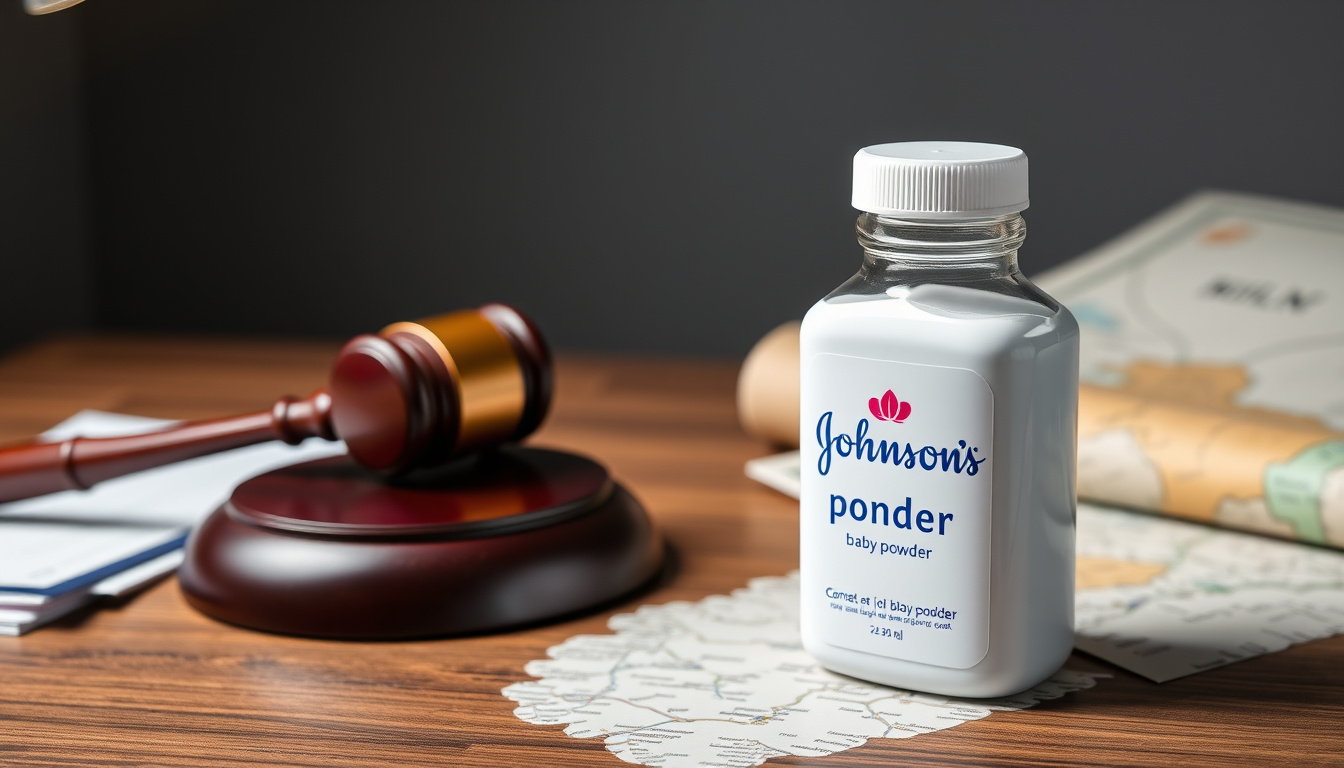

A $40 million jury verdict in 2025, tens of thousands of pending lawsuits, and a renewed push to settle through the tort system rather than bankruptcy — Johnson & Johnson’s talc litigation keeps making headlines. But the company’s story is bigger than courtrooms. It’s an American giant with deep roots in Ireland, a family name that no longer controls the business, and a product line that touches nearly every medicine cabinet.
Global Revenue (2024): Approx. $95.2 billion ·
Global Employees: 130,000+ ·
Major Legal Payout (2025): $40 million
Quick snapshot
- J&J is an American company headquartered in New Brunswick, New Jersey (J&J 2024 Annual Report)
- J&J faces tens of thousands of talc lawsuits (Drugwatch)
- 2025 jury verdict awarded $40 million to two plaintiffs (J&J press release)
- Whether the $8.9 billion global settlement will be approved by all plaintiffs
- Exact number of J&J employees in Ireland (not publicly confirmed)
- Total eventual payout for talc claims
The snapshot reveals a company with deep legal exposure but strong financial underpinnings.
Seven key datapoints paint the full picture of corporate scale and legal exposure.
| Attribute | Detail |
|---|---|
| Founded | 1886 (J&J Company Info) |
| Headquarters | New Brunswick, New Jersey, USA (J&J 2024 Annual Report) |
| CEO | Joaquin Duato (company leadership) |
| Revenue (2024) | ~$95.2 billion (J&J 2024 Annual Report) |
| Global Employees | 130,000+ (J&J 2024 Annual Report) |
| Stock Symbol | JNJ (NYSE) |
| Major Irish Sites | Limerick, Cork, Dublin, Ringaskiddy (J&J Ireland Careers) |
What is going on with Johnson & Johnson?
J&J is simultaneously defending its product safety in court and restructuring its legal strategy — a high-stakes gamble that will decide whether it pays billions or contains the damage.
Recent talc lawsuits and verdicts
- In 2025, a Missouri jury ordered J&J to pay $40 million to two women who claimed talc caused ovarian cancer (J&J press release).
- Previous verdicts have exceeded $2 billion in some cases, later reduced on appeal (Drugwatch (product-liability tracker)).
- As of May 2026, J&J faced 67,623 pending talc cases in New Jersey alone (Drugwatch).
J&J’s bankruptcy strategy (LTL Management)
The company created a subsidiary, LTL Management, in 2021 to handle talc claims and filed for bankruptcy — a move intended to cap payouts.
In March 2025, a judge dismissed Red River Talc’s bankruptcy, ending that strategy (ConsumerNotice (legal tracker)). J&J then announced it would return to the tort system to “defeat meritless talc claims” (J&J statement).
FDA actions and product safety
J&J stopped selling talc-based baby powder in the U.S. in 2020, switching to cornstarch, but maintains the talc was safe. No FDA recall of the product has been issued, though the agency has monitored the litigation.
The pattern: J&J is betting that defending each case individually is cheaper and less reputationally damaging than a single settlement, but the mountain of 50,000+ cases makes that a long, expensive slog.
Is Johnson & Johnson based in Ireland?
J&J keeps its legal home in New Jersey but runs critical manufacturing and R&D through Irish subsidiaries, saving billions in taxes — a structure common among U.S. pharma giants.
Why does J&J have a strong Irish presence?
J&J established its first Irish manufacturing facility in Limerick in 1976. The country offers a low corporate tax rate (12.5%) and access to the European market. The company’s Irish operations are part of Johnson & Johnson Innovative Medicine, formerly Janssen.
J&J subsidiaries and facilities in Ireland
- Limerick: sterile manufacturing
- Cork: pharmaceutical production
- Dublin: commercial and administrative hub
- Ringaskiddy, County Cork: biopharmaceutical manufacturing (J&J Ireland Careers)
Number of employees in Ireland
The exact figure is not publicly confirmed by J&J, but the company employs several thousand across its Irish sites, according to industry reports and career pages.
For corporate-tax watchers, J&J’s Irish footprint is a textbook example of tax-driven operations. For Irish workers, it means thousands of high-skilled jobs in pharma and medtech.
Is Johnson & Johnson British or American?
Founding and early history
Johnson & Johnson was founded in 1886 in New Brunswick, New Jersey, by three American brothers: Robert Wood Johnson, James Wood Johnson, and Edward Mead Johnson (J&J History). It is an American multinational corporation, not British.
Headquarters and global footprint
The company remains headquartered in New Brunswick, New Jersey. It operates in 60+ countries, with major R&D and manufacturing in the U.S., Europe (especially Ireland), and Asia.
National identity and corporate structure
J&J is listed on the NYSE (JNJ) and is subject to U.S. securities regulations. Its board and executive leadership are American. The “Johnson” name is purely historical — no British connection exists.
The catch: Despite being thoroughly American, J&J’s large Irish operations and tax domiciliation of some subsidiaries sometimes confuse observers into thinking it’s European.
Does the Johnson family still own J&J?
The Johnson family name is on the door, but control left decades ago. Today, institutional investors and index funds call the shots.
Johnson family involvement over time
When J&J went public in 1944, the Johnson family retained significant stakes. Over generations, shares were sold or distributed. No family member has served as CEO since Robert Wood Johnson II in the 1960s. Today, family descendants may hold shares but do not run the company.
Current shareholder structure
- Largest shareholders are institutional investors like Vanguard, BlackRock, and State Street (Yahoo Finance (ownership data)).
- The company is publicly traded; no controlling shareholder exists.
Publicly traded status
J&J is a component of the Dow Jones Industrial Average and S&P 500. Its market cap in 2025 exceeded $400 billion.
The pattern: The Johnson family’s ownership evolution mirrors that of most founding families — early IPOs dilute control, and professional management takes over. The name is a heritage brand, not a governance structure.
How much did the talc scandal payout?
The $40 million verdict in 2025
In June 2025, a Missouri jury awarded $40 million to two women who said talc caused their ovarian cancer (J&J press release). The company says it will appeal.
Historical settlement amounts
- 2018: $4.7 billion verdict (later reduced)
- 2021: $2.1 billion verdict in New Jersey (overturned)
- 2023: J&J proposed $8.9 billion global settlement (Darrow AI (legal analysis))
Total outstanding liability estimates
Analysts estimate J&J’s total talc liability could range from $10 billion to $20 billion if all claims are settled. The proposed $8.9 billion fund would cover 99.75% of current ovarian cancer claims, according to some legal summaries (TruLaw (legal tracker)).
Why this matters: For J&J, the difference between a $9 billion settlement and a $20 billion liability is existential for its consumer health division. The tort system — not bankruptcy — will decide which number sticks.
Timeline of key events
- 2018: First major talc verdict: $4.7 billion awarded to 22 women (later reduced) (Drugwatch)
- 2021: J&J creates subsidiary LTL Management and files for bankruptcy (Drugwatch)
- 2023: J&J proposes $8.9 billion global talc settlement (Darrow AI)
- March 2025: Judge dismisses Red River Talc bankruptcy; J&J returns to tort system (ConsumerNotice)
- June 2025: Jury orders J&J to pay $40 million to two women in Missouri (J&J)
The timeline shows a decade of legal escalation that has forced J&J to fundamentally shift its defense strategy.
What we know vs. what remains unclear
Confirmed facts
- J&J is an American company headquartered in New Brunswick, New Jersey (J&J Annual Report)
- J&J has a large operational presence in Ireland (J&J Ireland Careers)
- Over 50,000 talc lawsuits were pending as of 2025 (Drugwatch)
- A 2025 jury verdict awarded $40 million (J&J)
What’s unclear
- Whether the $8.9 billion global settlement will be approved by all plaintiffs
- Exact number of J&J employees in Ireland
- The eventual total amount J&J will pay for talc claims
- Whether J&J will succeed in overturning the 2025 verdict on appeal
- J&J is publicly traded; the Johnson family does not have a controlling stake (Yahoo Finance)
The uncertainties could shift the company’s financial outlook depending on how courts and plaintiffs respond.
Voices from both sides
“We are encouraged by the progress of our global talc settlement and remain confident in the safety of our products.”
— J&J spokesperson, response to $40 million verdict (J&J press release)
“This jury sent a clear message that J&J cannot hide behind bankruptcy to avoid accountability.”
— Plaintiff attorney, on the 2025 verdict (Drugwatch (reporting))
“Our Irish facilities are critical to our global supply chain and innovation pipeline.”
— CEO Joaquin Duato, 2024 interview (J&J Ireland Careers)
These opposing narratives define the legal battle and the stakes for each side.
What it means for investors, consumers, and the company
Johnson & Johnson enters 2026 with its talc litigation back in the courtroom, not bankruptcy court, and with a $40 million verdict on the books. The company’s financial health is strong — $95 billion in revenue and a growing pharmaceutical pipeline — but the legal overhang remains the biggest risk. For investors, the key variable is the global settlement: if the $8.9 billion plan clears legal hurdles, the stock could rally. If it collapses and trials continue, J&J faces years of negative headlines and potential verdicts that could push liability into the tens of billions. For the company, the choice is clear: settle on terms it can control, or let juries set the price.
For investors tracking the company’s market performance alongside its legal challenges, a detailed Johnson & Johnson stock analysis provides insight into whether the stock is a buy, sell, or hold.
Frequently asked questions
Is Johnson & Johnson talcum powder safe?
J&J maintains that its talc never contained asbestos and is safe. However, thousands of plaintiffs claim otherwise, and juries have awarded billions in damages. The FDA has not issued a recall.
Why did Johnson & Johnson stop selling talc-based baby powder?
J&J discontinued talc-based baby powder in the U.S. in 2020, citing declining sales and “misinformation” about safety. It switched to cornstarch-based powder.
Does Johnson & Johnson still sell baby powder?
Yes, but only the cornstarch-based version in the U.S. Talc-based powder is still sold in some international markets.
How many talc lawsuits are pending against J&J?
As of May 2026, over 67,000 cases were pending in New Jersey alone, according to Drugwatch. Total nationwide tally exceeds 50,000.
What is LTL Management and why did J&J use it?
LTL Management is a subsidiary J&J created in 2021 to assume talc liabilities. It filed for bankruptcy in an attempt to cap total payouts. A judge dismissed the bankruptcy in March 2025.
Will Johnson & Johnson go bankrupt from talc lawsuits?
Very unlikely. J&J has $95 billion in annual revenue and a market cap over $400 billion. Even a $20 billion liability is manageable, though it would hurt earnings.
Is Johnson & Johnson moving its headquarters to Ireland?
No. J&J remains headquartered in New Brunswick, New Jersey. It has major operations in Ireland for tax and manufacturing reasons but has no plans to re-domicile.
Related reading
- Manchester City F.C.: Legal Case, History & Fan Questions – cross-industry litigation parallels
- Right to Disconnect Ireland: Guide to Rules and Rights – Ireland’s workplace rules affect J&J’s Irish employees
These related articles provide broader context on litigation and Irish workplace laws.

Grace Campbell leads fact-checking, source verification and corrections at Australia Pulse.